

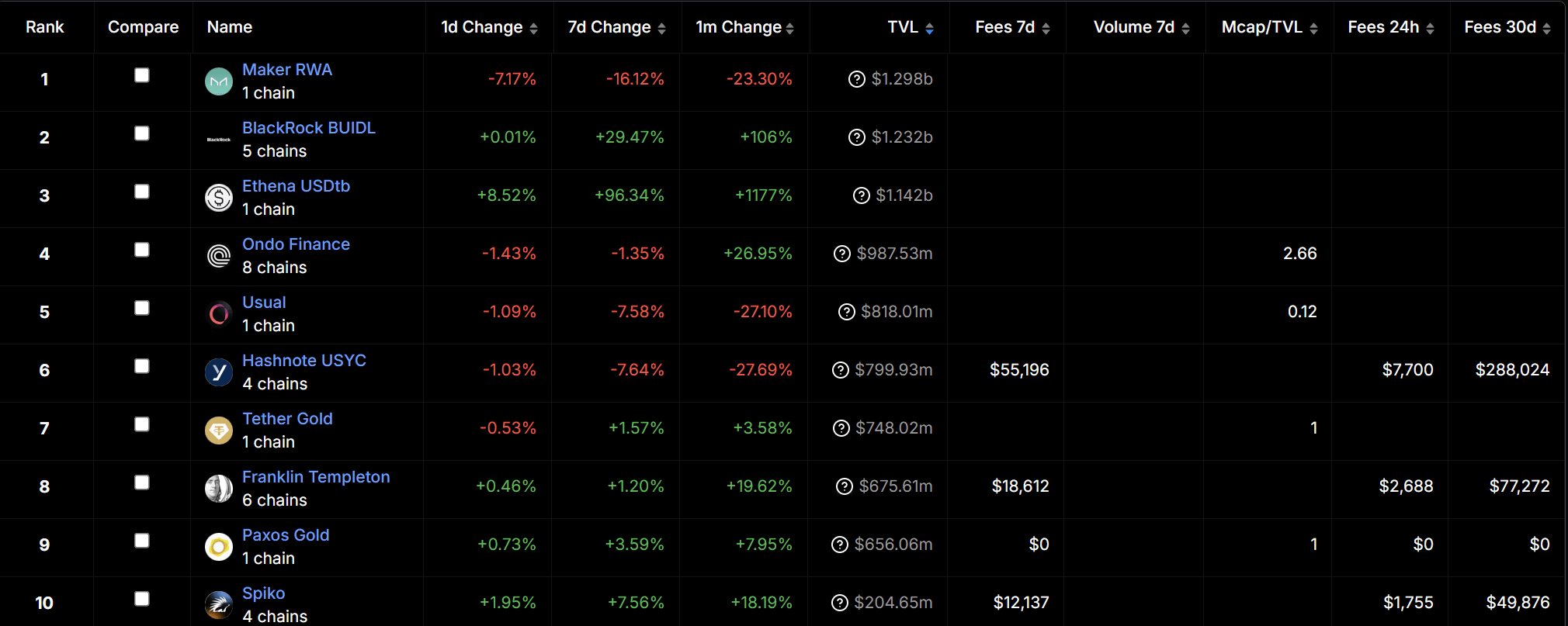
Real-world asset (RWA) protocols just passed decentralized exchanges (DEXs) to become the fifth-largest category in DeFi by total value locked (TVL), with around $17–30 billion now parked in tokenized Treasuries, private credit, and commodities.
That means more money now sits in tokenized “real world” products than in many of the apps people use to swap tokens. For everyday investors, this signals a shift in DeFi from pure speculation to yield and stability during a shaky macro backdrop and higher-for-longer interest rates.
RWAs have now surpassed DEXs to become the fifth largest category in DeFi by TVL.
At the start of this year, they weren't even in the top 10 categories. pic.twitter.com/EDMvPRQyWo
— DefiLlama.com (@DefiLlama) December 29, 2025
DISCOVER: 20+ Next Crypto to Explode in 2025
What Are RWAs And Why Are They Overtaking DEXs?
RWAs are basically real-world investments wrapped as tokens. Think of a U.S. Treasury bond or a gold bar turned into a digital “claim ticket” you can move 24/7 on a blockchain instead of through a bank. That’s very different from a DEX, which works more like a crypto-only version of a stock exchange, matching trades between tokens. (If you want more DEX context, check our coverage of DEX trading volume and the largest DEX platform.)
According to DefiLlama data cited by Cointelegraph, RWA TVL climbed from around $12 billion in late 2024 to about $17 billion in 2025, and other trackers show the broader tokenized RWA market near $30 billion by Q3 2025, with roughly $17 billion in private credit and $7.3 billion in Treasuries. CoinDesk notes that RWA tokenization grew almost fivefold in three years, and banks like Standard Chartered even project that tokenized assets could reach $30 trillion by 2034. The money is not coming from degen yield farmers—large funds, banks, and DAOs now treat RWAs as serious yield tools.
Tokenized Treasuries lead the charge. Products like BlackRock’s BUIDL fund, Franklin Templeton’s tokenized money market funds, and Circle-style yield products all bring U.S. government debt returns on-chain, with typical yields higher than many bank accounts. As mentioned by Sam Reynolds of CoinDesk, several of these funds passed $1 billion in deposits each. Private credit platforms and tokenized commodities like gold-backed tokens also add layers of “TradFi meets crypto.”

How Could This Shift Change DeFi Opportunities For You?
For beginners, the message is simple: DeFi is starting to look more like a digital bond and money-market supermarket, not just a casino of meme coins. Instead of chasing random APYs, you now see on-chain products backed by things you already understand—Treasuries, corporate loans, gold. That does not make them risk-free, but the source of yield feels more familiar than a complex farm that prints a new token out of thin air.
Institutional allocators and DeFi-native treasuries treat RWAs as base-layer yield and collateral. Per AInvest, RWA TVL more than tripled year-over-year, with DAO treasuries shifting part of their stables into tokenized Treasuries and private credit. That shift matters for you because more RWA collateral often means more lending markets, more stable yield products, and more ways for simple users to earn something on idle stablecoins. You can already see this trend in tokenization plays on major chains, as we covered in our Tokenization of assets explainer.
Commodities enter the picture, too. Rallies in gold and silver attracted fresh money into gold-backed tokens like Tether Gold and Paxos Gold, pushing tokenized commodities’ market cap toward $4 billion. For a regular user, that means you can hold gold exposure in your crypto wallet, swap it in seconds, or use it as collateral on certain lending platforms, without shipping a single bar.
DISCOVER: Best New Cryptocurrencies to Invest in 2025
What Are the Risks of Chasing RWA Yield In DeFi?
RWA protocols feel safer because they tie to familiar assets, but you still face smart contract, regulatory, and issuer risk. You do not hold a Treasury bond directly in your brokerage account. You hold a token that depends on a specific company to actually own and manage the bonds in the background. If that bridge breaks—through mismanagement, lawsuit, or regulation—your token may stop reflecting the real asset.
Many RWA platforms also operate with permissioned rules or KYC. That means they can freeze addresses or change terms based on compliance demands. It is not necessarily bad, but it moves closer to banking rules than pure DeFi. 100mCrypto reports that most RWA value concentrates in a small number of issuers and private networks, which creates concentration risk. If one big player runs into trouble, a lot of on-chain yield products feel it at once.
For you, the practical rule is simple: treat RWAs as yield with extra steps, not as a savings account. Never park rent money in a token that rests on a complex legal wrapper. Spread your risk, favor transparent issuers, and read the docs on what you legally own. If anything sounds guaranteed, walk away.
The rise of RWAs over DEXs shows that DeFi is growing and moving closer to how traditional markets work. Over the next few years, expect more “normal” assets to show up in your wallet, along with better tools to earn on them safely if you stay picky, informed, and conservative with your risk.
DISCOVER: 9+ Best High-Risk, High-Reward Crypto to Buy in 2025
Follow 99Bitcoins on X For the Latest Market Updates and Subscribe on YouTube For Daily Expert Market Analysis
The post Real-World Asset (RWA) DeFi Protocols Overtake DEXs in TVL—Here’s Why It Matters appeared first on 99Bitcoins.