

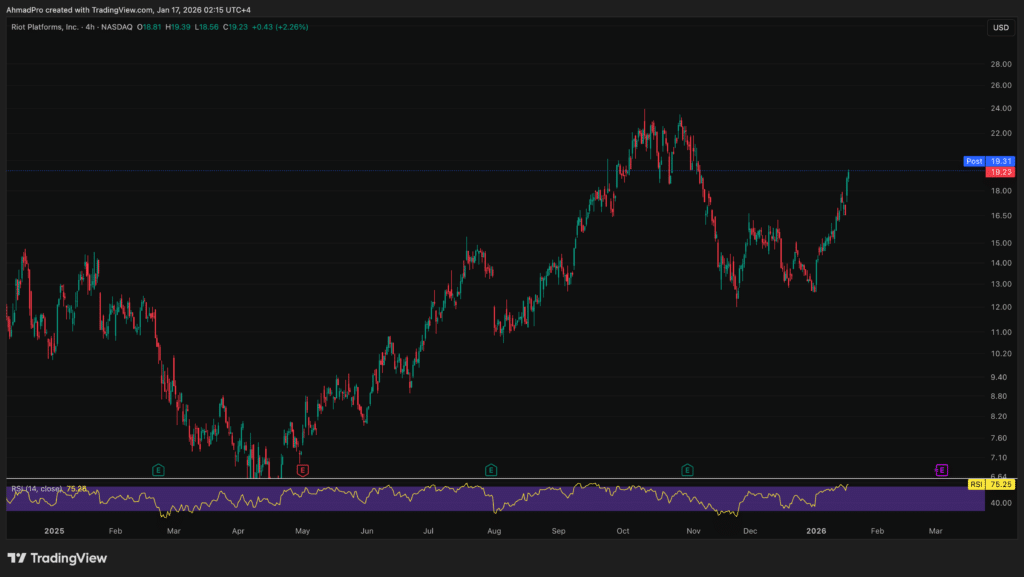
Bitcoin mining stocks jumped after Riot Platforms signed a long-term deal with chip giant AMD, while Galaxy Digital pushed ahead with a massive Texas expansion. Shares moved as investors linked these deals to steadier revenue at a time when Bitcoin USD trades in a tight range. The backdrop matters: record network competition is squeezing miners, forcing them to rethink how they make money.
(Source: RIOT Stock Price / TradingView)
DISCOVER: Top Ethereum Meme Coins to Buy in 2026
What Just Happened With Riot, Galaxy, and AMD?
Riot Platforms agreed to a 10-year data center lease with AMD at its Rockdale, Texas, site, valued at $311 million, with expansion options that could push the total to $1 billion. Think of this like renting out unused warehouse space to a reliable corporate tenant instead of leaving it empty. According to Riot, the deal can scale up to 200 megawatts.
We’re excited to share a series of transformative transactions that firmly establish our rapidly scaling data center business – including fee simple acquisition of our Rockdale site and signing our first data center lease with AMD.
Read the full press release here:…
— Riot Platforms, Inc. (@RiotPlatforms) January 16, 2026
Galaxy Digital is taking a similar path. The firm lined up $460 million in fresh funding, on top of a prior $1.4 billion loan, to expand its Helios campus in Texas toward 3.5 gigawatts. About 800 megawatts are already committed to AI firm CoreWeave.
Why should a beginner care? Because mining companies earn less when competition rises. Renting power and data centers to AI clients creates income that does not depend on Bitcoin’s daily price swings.
Why This Matters for Bitcoin Investors
Bitcoin mining works like a lottery where everyone buys more tickets each year. The total computing power, known as hashrate, keeps setting records. That means each miner earns fewer Bitcoin unless the price climbs fast.
Bitcoin mining update:
At $90,436 per BTC, my 27 machines are making $4,800 a month now (0.053019 BTC)
It costs me $3,752 a month to keep them operating (hosting/electric), for a profit of $1,048/month.
To date, I've stacked 3.84 BTC worth $348,462 and will continue to stack. pic.twitter.com/7mvRaHFh3K
— Your Friend Andy (@YourFriendAndy) January 10, 2026
By pivoting toward AI and high-performance computing, miners turn cheap Texas power into a second business line. Riot now controls about 1.7 gigawatts of power across Texas after selling roughly 1,080 BTC to fund expansion, according to MarketChameleon. For shareholders, that looks more like a utility company with long-term contracts.
This shift also ties into the broader Bitcoin story. When mining firms remain solvent during flat Bitcoin-to-USD periods, they dump fewer coins onto the market. That can ease selling pressure over time.
DISCOVER: Top 20 Crypto to Buy in 2026
Where the Risks Still Sit
This is not a free win. Building AI data centers costs serious money upfront, and delays can hit cash flow. If AI demand cools, those long-term plans lose shine.
Mining stocks also move faster than Bitcoin itself. A 5% dip in Bitcoin often turns into a double-digit stock swing. If you are new, treat mining shares as high-volatility bets, not savings accounts.
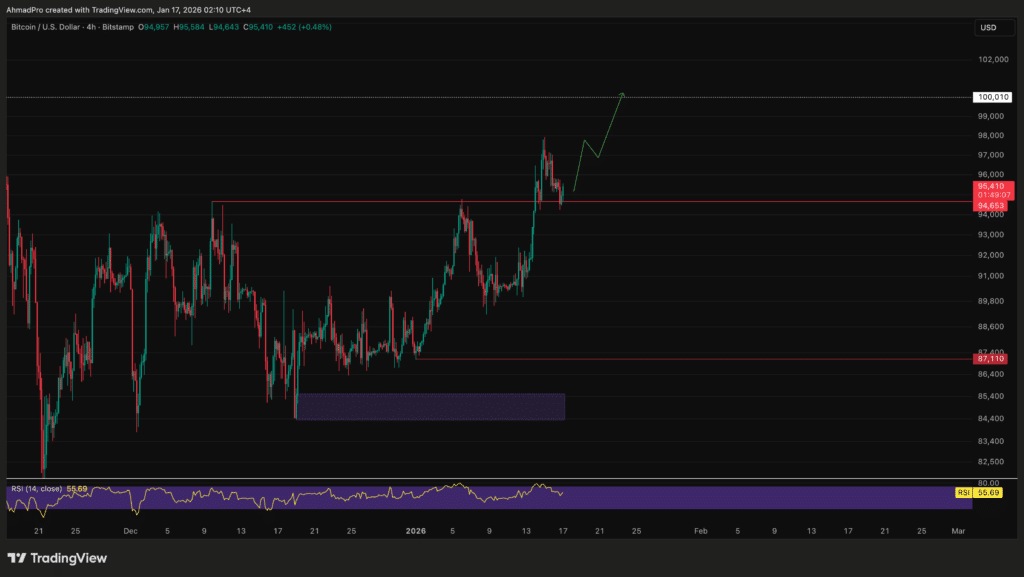
(Source: BTCUSD / TradingView)
For readers tracking the bigger picture, this fits with themes around Bitcoin price predictions and growing institutional Bitcoin investments. Stronger miners tend to support a healthier network.
Going forward, watch how much revenue these AI leases actually bring in. If the cash flows show up as promised, mining stocks may trade less like pure Bitcoin bets and more like power-backed infrastructure plays.
DISCOVER: Top Solana Meme Coins to Buy in 2026
Follow 99Bitcoins on X For the Latest Market Updates and Subscribe on YouTube For Daily Expert Market Analysis
The post Bitcoin Mining Stocks Jump as Riot Taps AMD, Texas Builds Grow appeared first on 99Bitcoins.