

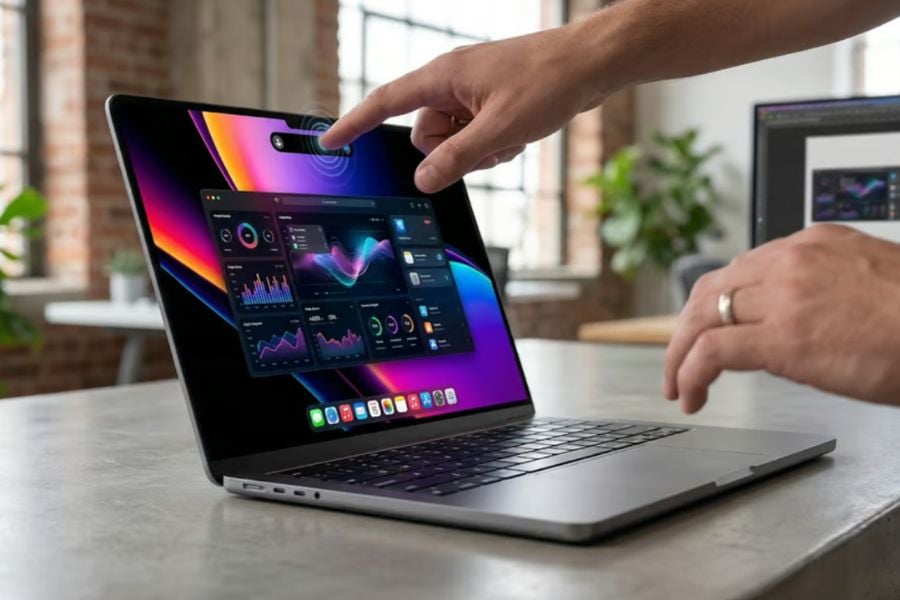
Apple is reportedly entrusting Samsung Display with one of the biggest MacBook hardware upgrades in years.
Samsung Display has secured the sole contract to produce touchscreen organic light-emitting diode (OLED) panels for Apple’s upcoming 14-inch and 16-inch laptops.
According to supply chain reports from South Korean outlet The Elec, the initial order calls for roughly 2.5 million units. Mass production is expected to begin around August at Samsung’s advanced 8.6-generation facility in Asan, South Korea, ahead of a potential laptop release targeted for late 2026 or early 2027.
The transition would mark Apple’s first MacBook Pro with an OLED touchscreen, bringing display technology already used in premium smartphones and the latest iPad Pro to its flagship laptops.
Why competitors were left behind
Apple typically relies on multiple suppliers to keep component costs low and hedge against production delays. However, rival manufacturers LG Display and China’s BOE Technology Group were left out of this development cycle due to technical constraints and existing factory workloads.
While Samsung utilized its newer 8.6G line, which processes larger glass sheets more efficiently for laptop-sized displays, LG considered relying on its existing 6th-generation lines.
“The existing 6th generation lines are being used to produce OLEDs for smartphones and tablets, so it is difficult to handle the volume of large-area MacBook panels,” an industry official told The Elec, adding, “Entry into the MacBook Pro OLED supply chain will not happen until 2029 at the earliest.”
BOE was similarly sidelined due to concerns over panel yield rates and technological maturity. By working directly with Apple from the early development stages, Samsung matched panel specifications and manufacturing conditions to claim total control over the initial production run.
Apple’s single-source dilemma
Relying on a single vendor for a flagship product redesign represents a calculated risk for Apple. While Samsung’s 8.6G production line offers higher yields and better unit economics, placing all 2.5 million display orders in one basket leaves Apple vulnerable to any localized factory disruptions or yield dips.
Furthermore, committing to an expensive, multi-layer tandem OLED panel while reusing existing chip architectures like the rumored M5 Pro and M5 Max means consumers could face a steep price premium primarily for external design upgrades. If component costs remain elevated, Apple risks narrowing the target market for its redesigned laptop line to only the highest-end buyers.
What’s hot at TechRepublic
Consumer and industry realities
For buyers, the transition to OLED panels with integrated touch technology promises noticeable improvements: deeper contrast, faster response times, longer battery longevity, and thinner display profiles. However, consumers should weigh these aesthetic and interactive perks against potential price spikes. Those holding out for raw processing jumps may want to consider whether a display and chassis overhaul justifies upgrading before next-generation chip architectures arrive.
If the reported timeline holds, Apple’s OLED MacBook Pro would represent one of the most significant display upgrades in the product’s history. The exclusive deal also underscores Samsung Display’s current lead in large-format OLED manufacturing, a position competitors may take years to match.
Other News: The report comes as Apple is reportedly preparing a broader smart home push, including refreshed Apple TV and HomePod mini models alongside a new AI-powered home hub designed around its upgraded Siri experience.