


Disclosure: This article does not represent investment advice. The content and materials featured on this page are for educational purposes only.
Vietnam’s crypto market grows fast in 2026 as users focus on choosing the right exchange for their needs.
Summary
- Vietnamese crypto beginners favor HIBT for clear onboarding, VND payments, and simple spot trading in 2026.
- HIBT simplifies early crypto adoption in Southeast Asia, emphasizing transparency, ease of use, and beginner-friendly trades.
- Amid Vietnam’s grey-area regulations, users choose exchanges like HIBT that highlight clarity, security, and straightforward fees.
Vietnam remains one of Southeast Asia’s fastest-growing cryptocurrency markets. High mobile banking penetration, a tech-savvy retail user base, and sustained interest in digital assets have shaped how Vietnamese users interact with crypto platforms. By 2026, the core question for most users is no longer whether crypto can be accessed with Vietnamese dong (VND), but how to choose the right exchange for their specific needs.
Unlike mature markets where users often rely on a single platform, crypto adoption in Vietnam is more fragmented. Exchange selection is typically driven by access method, experience level, and intended use, rather than brand size alone.
Access comes before platform
For VND users, the most critical factor is how local currency is converted into crypto. In practice, most users follow one of three common paths:
- Using fiat on-ramps or third-party payment providers
- Buying crypto through peer-to-peer (P2P) marketplaces
- Starting with region-oriented platforms designed to simplify onboarding
This explains why the concept of a single “best exchange” can be misleading. Different platforms often serve different roles across the user journey.
Global exchanges: Liquidity and market depth
Large global exchanges such as Binance and OKX are widely used in Vietnam, particularly after users have already converted VND into crypto. These platforms are valued for their liquidity, broad asset coverage, and advanced trading infrastructure.
However, access to these exchanges frequently relies on P2P markets or external payment channels. While this setup works well for experienced users, it can introduce additional complexity for beginners who are still learning how crypto transactions function.
Platforms for experienced traders
Some users prioritize execution speed, derivatives access, and advanced trading tools. Platforms like Bybit are often chosen by traders who already understand order types, risk management, and custody considerations.
For these users, fiat onboarding is treated as a functional step rather than a core experience. This model is effective for seasoned participants but may be less suitable for first-time buyers.
Region-oriented exchanges and the beginner entry point

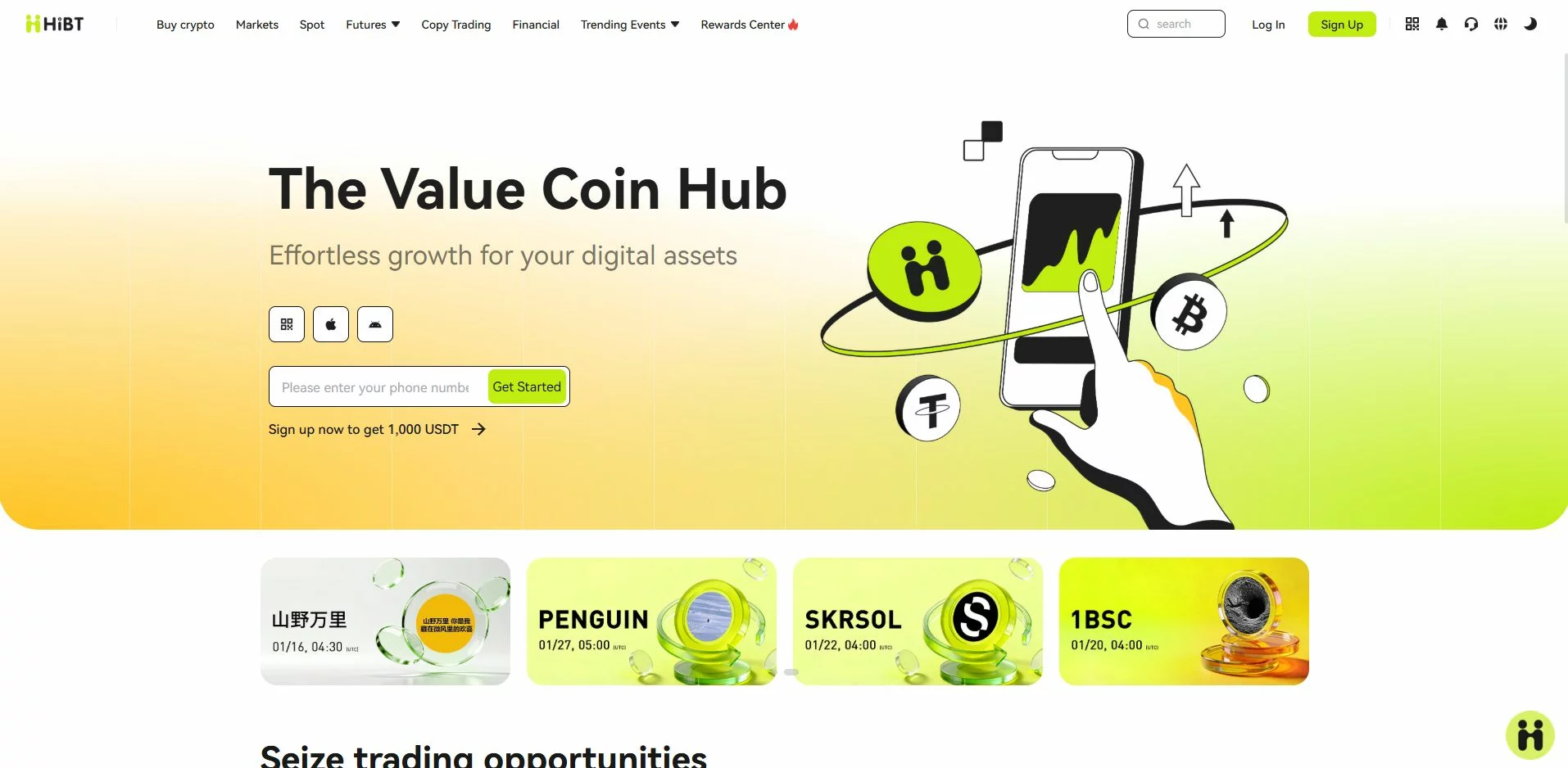
A growing segment of Vietnamese users focuses on minimizing complexity during the early stages of crypto adoption. These users often prefer platforms that emphasize clear onboarding, localized payment flows, and spot trading, rather than feature-heavy environments.
One example of this category is HIBT, a region-oriented exchange serving Southeast Asian users. Instead of competing on advanced trading features, HIBT focuses on simplifying the path from registration to the first trade, making it more accessible for users without professional trading backgrounds. This positioning reflects a broader trend in emerging markets, where ease of use and transparency increasingly influence platform choice.
More information about HIBT’s platform approach and user positioning can be found in this Best Crypto Exchange for Beginners (2026 Guide), which outlines how beginner-oriented exchanges structure onboarding and early trading experiences.
Regulation and risk awareness in Vietnam
As of 2026, cryptocurrency in Vietnam operates within a regulatory grey area. While digital assets are not recognized as legal tender, individuals are generally allowed to hold and trade crypto at their own risk. This environment places greater responsibility on users to understand platform mechanics, fees, and security practices.
As a result, many Vietnamese users prioritize exchanges that provide visible pricing, straightforward interfaces, and clear risk exposure, especially when buying crypto with VND.
How Vietnamese users typically buy Bitcoin
In practice, buying Bitcoin in Vietnam usually involves a process rather than a single platform:
- Converting VND into crypto through fiat on-ramps or P2P markets
- Executing spot trades on an exchange aligned with the user’s experience level
- Managing custody by keeping assets on-platform or transferring to self-custody wallets
Tools that provide transparent market data and decision frameworks also play an important role in helping users make informed choices. For many beginners, understanding how to choose a crypto exchange based on usability rather than hype is often more important than comparing feature lists.
Why a multi-platform strategy is common
Market behavior suggests that many Vietnamese users adopt a multi-platform approach:
- One platform for fiat access
- Another for liquidity and broader markets
- Additional tools for research and market monitoring
This structure reflects a broader trend across emerging markets, where exchanges are viewed as infrastructure rather than all-in-one solutions.
Conclusion
In 2026, choosing a crypto exchange in Vietnam depends less on rankings and more on context. Global exchanges offer liquidity, advanced platforms cater to experienced traders, and region-oriented services help simplify entry for new users.
This diversity explains why multiple platforms — including global exchanges and beginner-focused options like HIBT — continue to coexist within Vietnam’s evolving crypto ecosystem.
Disclosure: This content is provided by a third party. Neither crypto.news nor the author of this article endorses any product mentioned on this page. Users should conduct their own research before taking any action related to the company.


