


I’ve looked into just about every business phone system on the market in 2026. Along the way, I uncovered the best SIP trunk providers based on pricing, setup, customer service, features, and integrations.
Each of these providers can help you continue using your old equipment while migrating communications to the cloud and reducing reliance on outdated infrastructure.
| SIP trunk providers | Best for | Starting price |
|---|---|---|
| Nextiva | Fast SIP trunk deployment | Starts at $14.95 per month |
| Ooma | Businesses needing SIP and IP trunking | Custom quote |
| GoTo Connect | SIP trunking with broad integrations | Custom quote |
| Intermedia Unite | Reliable SIP trunking with transparent pricing | $16.95 per month |
| 8×8 | Global SIP trunking coverage | Custom quote |
Top SIP trunking providers comparison
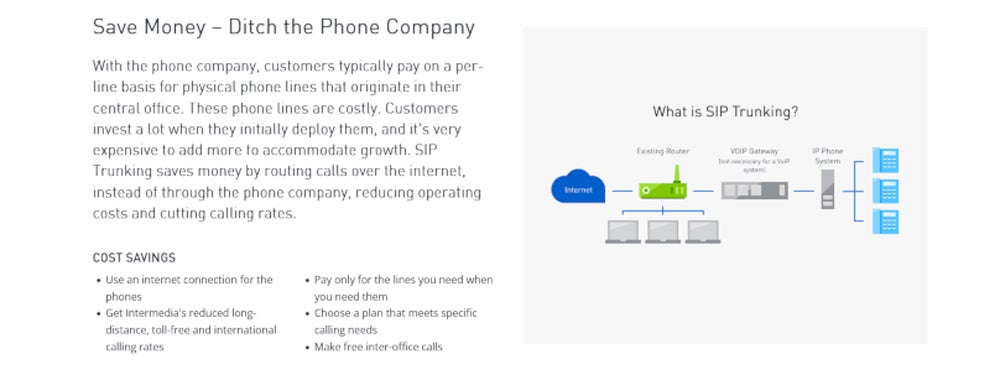
SIP trunking providers connect a business’s on-premises PBX system to the internet rather than traditional phone lines. By bridging the gap between PSTN (Public Switched Telephone Network) technology and modern digital communications such as VoIP (Voice over Internet Protocol), SIP trunking enables cost-effective, scalable communication. This allows businesses to keep using legacy equipment while they gradually transition to the cloud.
The major differences between SIP trunking providers often come down to cost structures, compatibility with existing systems, and overall service reliability.
| Best SIP trunk provider | SIP trunk type | Coverage | Best-fit business type |
|---|---|---|---|
| Nextiva | SIP trunking for business phone systems | U.S., Canada, and Puerto Rico | Businesses that want a fast, guided SIP setup with a recognizable business phone provider |
| Ooma | SIP and IP trunking | 25+ countries | Businesses that want help connecting existing PBX infrastructure to cloud-based calling |
| GoTo Connect | SIP trunking with UCaaS features | U.S. only | Teams that want SIP trunking alongside meetings, messaging, and app integrations |
| Intermedia Unite | SIP trunking with metered and unlimited options | U.S. only | Businesses that want predictable, transparent SIP trunk pricing |
| 8×8 | Global SIP trunking and PSTN replacement | 100+ countries; full PSTN replacement in 55+ | Distributed or multinational businesses that need broad international coverage |
RingCentral: Best SIP trunk provider overall


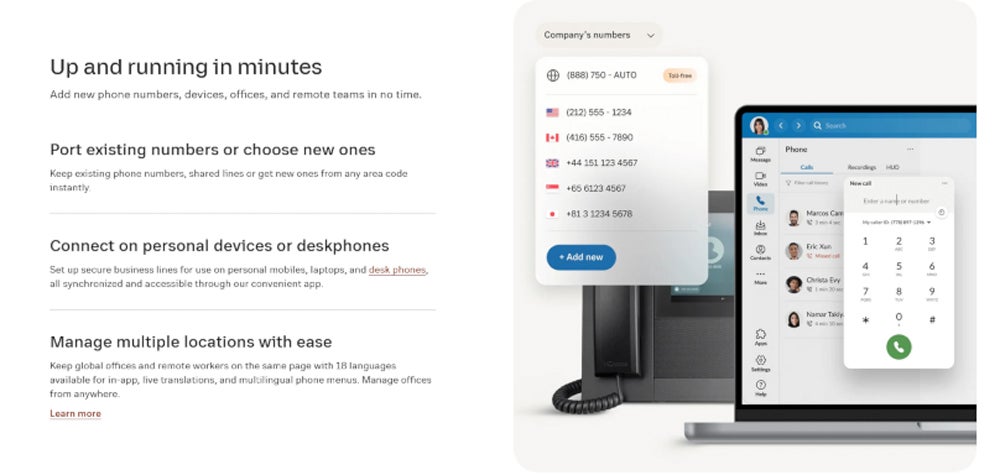
While largely known for world-class, cloud-based phone systems, RingCentral also offers flexible SIP trunking with low-latency voice connectivity and phased cloud migration support. With a massive library of more than 300 pre-built integrations, you’ll be able to sync your modernized system as you transition with your other business tools.
Why I chose RingCentral
Many companies looking for a SIP trunk solution want to migrate to the cloud gradually. RingCentral supports a hybrid-PBX deployment that allows internal dialing between employees using on-premises equipment and those signed into RingCentral’s cloud PBX solution, RingEx. Their powerful phone systems, contact center solutions and SIP trunking options in 50+ countries give you all the flexibility you need to modernize communications in a way that makes sense for your business. You can even choose to host your data in the U.S., Canada, the U.K. or Germany. The important part is you can make these changes at your own pace. Check out my full RingCentral review for more details.
Pricing
Cloud Connector is RingCentral’s SIP trunking and cloud transition solution. You will have to contact RingCentral and speak to a specialist to get a custom quote if you are interested in learning more.
Features
- Expert guidance as you migrate to the cloud.
- Supported in more than 50 countries.
- Massive library of pre-built integrations.
- Free phone numbers if you need them.
- Automatic failover routing any time.
- Fully redundant architecture.
- Centralized management of all VoIP, contact center and SIP users.

Pros and cons
| Pros | Cons |
|---|---|
|
|
Nextiva: Best for quick deployment

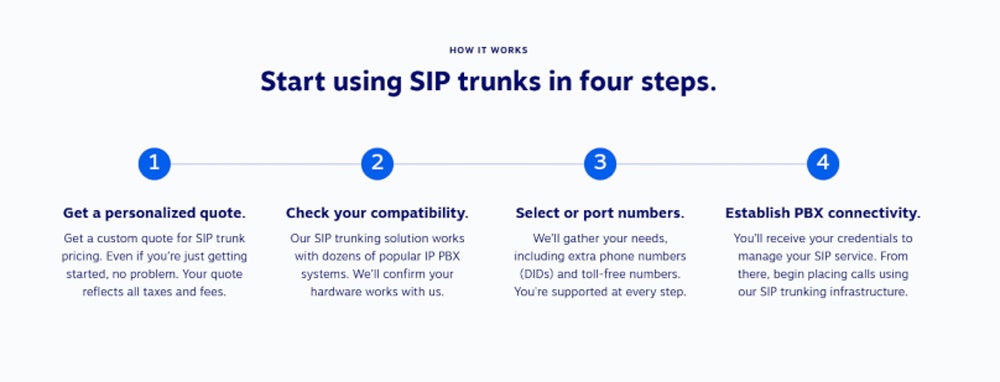
Nextiva eliminates the usual hassles of setup and onboarding through a quick, easy SIP trunking implementation process. With metered and unmetered plans, it’s a great choice for both employees who rarely make calls and teams of agents who work the phones all day.
Why I chose Nextiva
Nextiva is an affordable, fluff-free solution that works with most popular PBXs. Small businesses and enterprises alike can transition communications to the cloud with SIP trunking, an all-in-one business phone system, powerful contact center solutions or a combination of all three. If you are looking for a fast, zero-hassle way to move phone lines to the cloud, Nextiva’s transparent pricing and superior customer service are tough to beat. Take a look at our Nextiva review if you’d like to learn more about it.
Pricing
- Metered: $14.95 per month, plus $0.008 per minute. This plan includes 100 minutes, fast account setup, eight U.S. points of presence, and 24/7 support.
- Unmetered: $24.95 per month. This plan includes unlimited nationwide calling, everything in the metered plan, no per-minute charges, a toll-free number, and volume discounts.
- Custom quote: Nextiva recommends getting a personalized quote for SIP trunking so pricing reflects taxes, fees, direct-dial numbers, toll-free numbers, and other business-specific requirements.
Features
- Online account, user and line management.
- Built-in fraud protection.
- Enhanced 911 capabilities.
- Automated failover routing.
- Log of detailed call records.
- Free local or toll-free number.
- 100 free minutes on the metered plan.
- Volume discounts at scale.
- Same-day setup in most cases.

Pros and cons
| Pros | Cons |
|---|---|
|
|
Ooma: Best for SIP and IP trunking
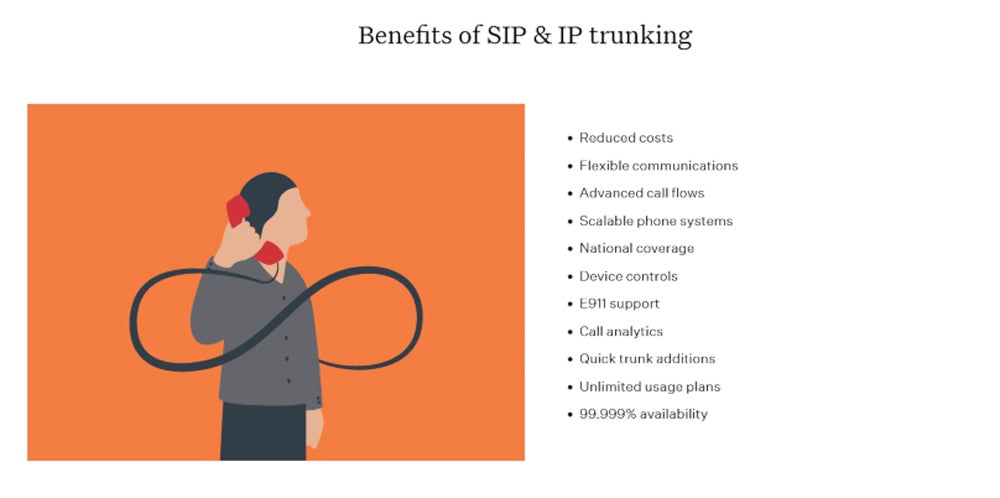
Ooma is well known for its easy DIY phone systems for residential and in-person offices. However, it also offers enterprise support for SIP and IP trunking, along with a wide range of other complicated communication needs. While some SIP trunking providers don’t offer any extra features, Ooma includes essential VoIP features, such as analytics, customizable call flows, and centralized device management.
Why I chose Ooma
Unlike a lot of the other providers on my list, Ooma supports analog PBX systems along with IP-enabled devices. You can also leverage IP trunking for other types of communication beyond voice. Handling video conferencing, messaging and other types of data is no problem. This also unlocks integrations and general internet connectivity for IP-enabled devices. Our in-depth Ooma review covers more information if you’d like a deeper dive.
Pricing
SIP and IP trunking are available via Ooma’s enterprise communications services. You will need to contact sales for pricing on SIP and IP trunking, but Ooma’s enterprise communication pricing starts at $19.99 per user per month for standard business telephony.
Features
- Supports voice, video, texting and messaging.
- Built-in call analytics and call flows.
- Supports analog PBX systems.
- Unlimited usage options.
- Streamlined device and user management.

Pros and cons
| Pros | Cons |
|---|---|
|
|
GoTo Connect: Best integrations

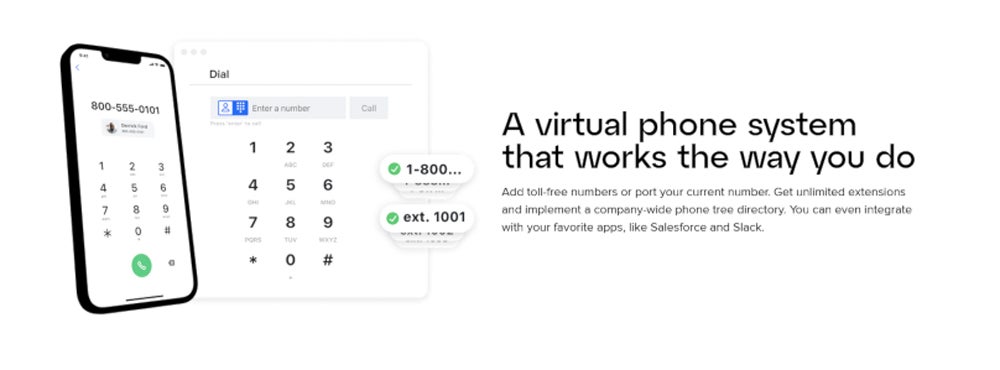
GoTo Connect offers SIP trunking services alongside its feature-rich VoIP and call center platform. However, it stands out for its deep integrations with well known CRM systems, collaboration tools, support platforms and marketing automation software. Aside from standard SIP trunking capabilities, you’ll be able to connect your legacy phone system to the tools your team uses every day.
Why I chose GoTo Connect
From automatic call logging, click-to-dial and interaction tracking to in-app notifications, ticket creation, call scheduling, lead management and audience segmentation, your team can enjoy a more connected communication experience. You can also adjust bandwidth for each trunk based on demand, so you don’t have to overpay for unused capacity.
Pricing
All of GoTo Connects plans are based on a custom quote tailored to your business. It depends on the capabilities you need, the number of users and the length of your contract.
Features
- Strong integrations with popular tools.
- Automated failover routing options.
- Fine-tuned bandwidth adjustments.
- Centralized device and user management.
- Affordable rates for all types of calls.

Pros and cons
| Pros | Cons |
|---|---|
|
|
Features
- Fully redundant, fail-proof architecture.
- 300 free long-distance minutes on the Bundled plan.
- Tons of optional features, like voicemail, faxing, auto attendant.
- Intuitive monitoring portal.
- Automated notifications system.

Pros and cons
| Pros | Cons |
|---|---|
|
|
8×8: Best global coverage

8×8 stands out in the SIP trunking market for its global infrastructure. The company’s SIP trunking services are highly praised for their reliability and sophistication, as well as the excellent support that accompanies them. It boasts 35 points of presence across five continents, offers full PSTN replacement in more than 55 countries, virtual number support in over 100 countries, and high call quality through local routing.
Why I chose 8×8
Aside from an extensive network, 8×8 supports a range of features, including local and toll-free numbers across numerous countries, redundancy for reliable service and competitive pricing. The emphasis on call quality and reliability—along with an architecture that ensures no single point of failure and guarantees low packet loss and latency—makes it a great choice for performance reasons, too. Check out my full 8×8 review to learn more about its services.
Pricing
8×8’s SIP trunking services are based on a custom quote that depends on your country, business size and a wide range of other factors.
Features
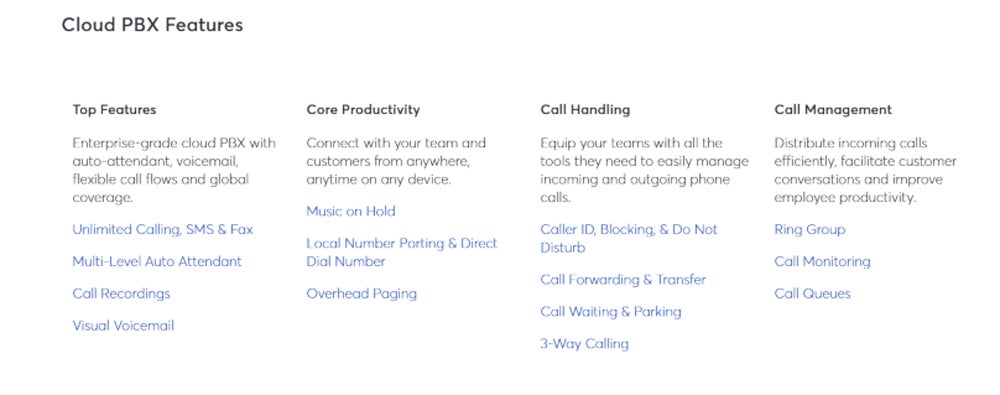
- Full PSTN replacement in 55+ countries.
- Supported in over 100 countries.
- Superior quality via local routing.
- 35 points of presence across five continents.
- Guaranteed lo packet loss and latency.

Pros and cons
| Pros | Cons |
|---|---|
|
|
How do I choose the best SIP trunking provider for my business?
The first thing to do is to verify compatibility with your existing phone system, PBX, or unified communications platform. This is straightforward, but compatibility issues can lead to unexpected costs and deployment delays. Make sure the provider supports your system’s specific protocols, VoIP codecs, and network requirements.
Beyond the technical considerations, it’s important to evaluate your business communication needs, budget, and the specific features offered by the SIP trunk provider. Look for reliable uptime, quality customer support, scalable options, and compatibility with your existing PBX system.
You should also choose a SIP trunking provider that offers a VoIP phone system or contact center technology that is viable for your business in the future. Yes, a SIP trunking provider lets you keep using your old technology, but you’ll also have the option to migrate users to the provider’s fully cloud-based platform. A provider that supports the channels and capabilities you may need over the next few years is a healthier long-term pick.
Taking a step back, I’d also look at the cost of ditching legacy equipment altogether and migrating to a fully-cloud based solution. You might be surprised how much VoIP phone systems cost — the savings you think you’re getting from hanging onto an on-premises PBX might not be quite as significant as you think.
Methodology
I incorporated my own experience, customer feedback, case studies and detailed spec sheets to put this guide together. I started with a list of dozens of SIP trunking providers, then narrowed it down to the best using the following criteria:
- Customer satisfaction: I looked for consistent positive feedback across various review platforms to ensure reliability and user satisfaction.
- Feature sets: The breadth and depth of features offered by each provider were examined, with emphasis on those that primarily support business communications.
- Pricing transparency: I favored providers who offered clear, straightforward pricing information, making it easier for businesses to understand their potential investments.
- Ease of integration: A key consideration was how well each SIP trunking service integrates with existing business systems, with the aim of minimal disruption during implementation.
- Scalability: I assessed each provider’s ability to scale with a business’s growing needs, ensuring that the services can adapt to changing demands.


